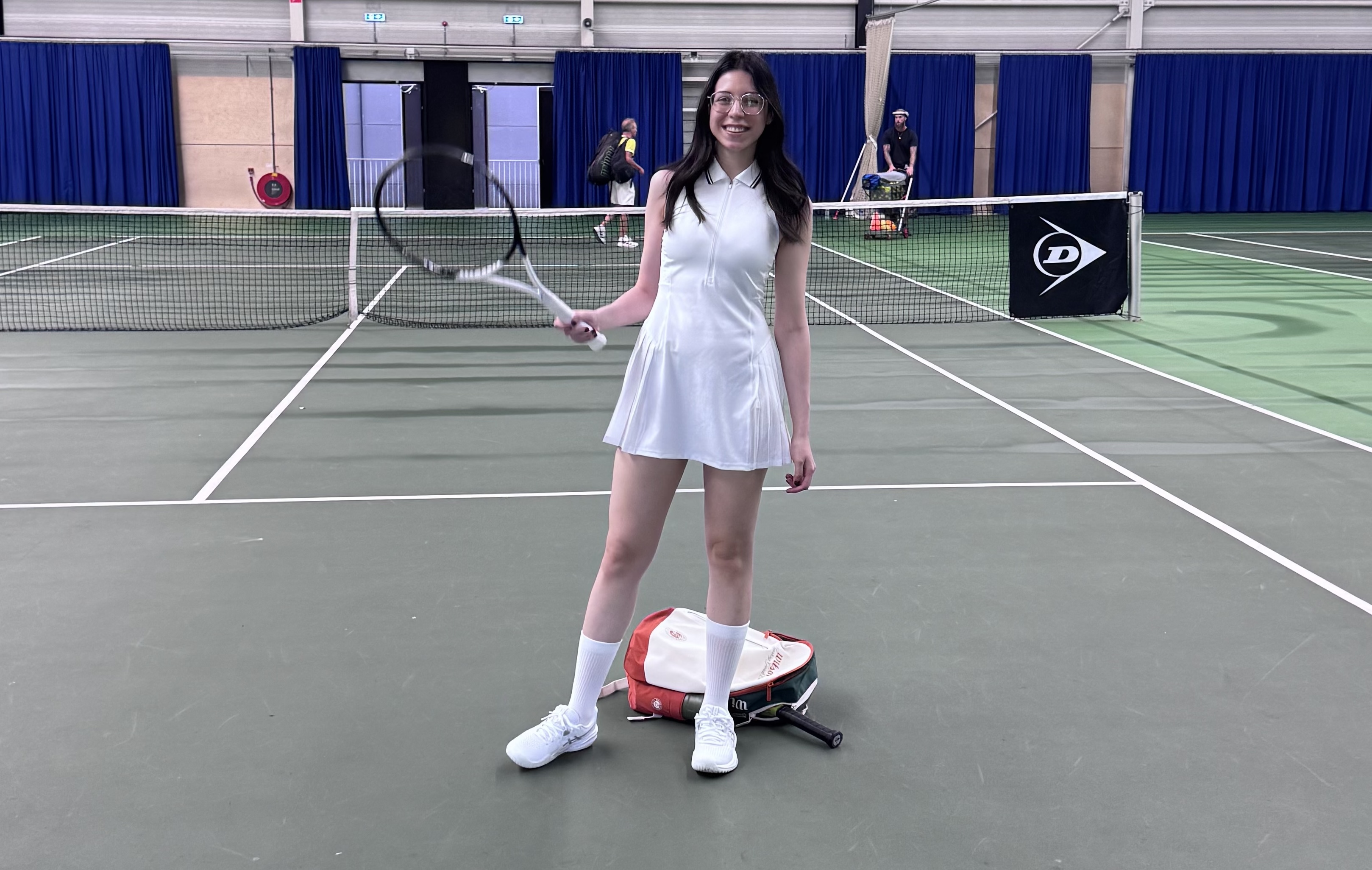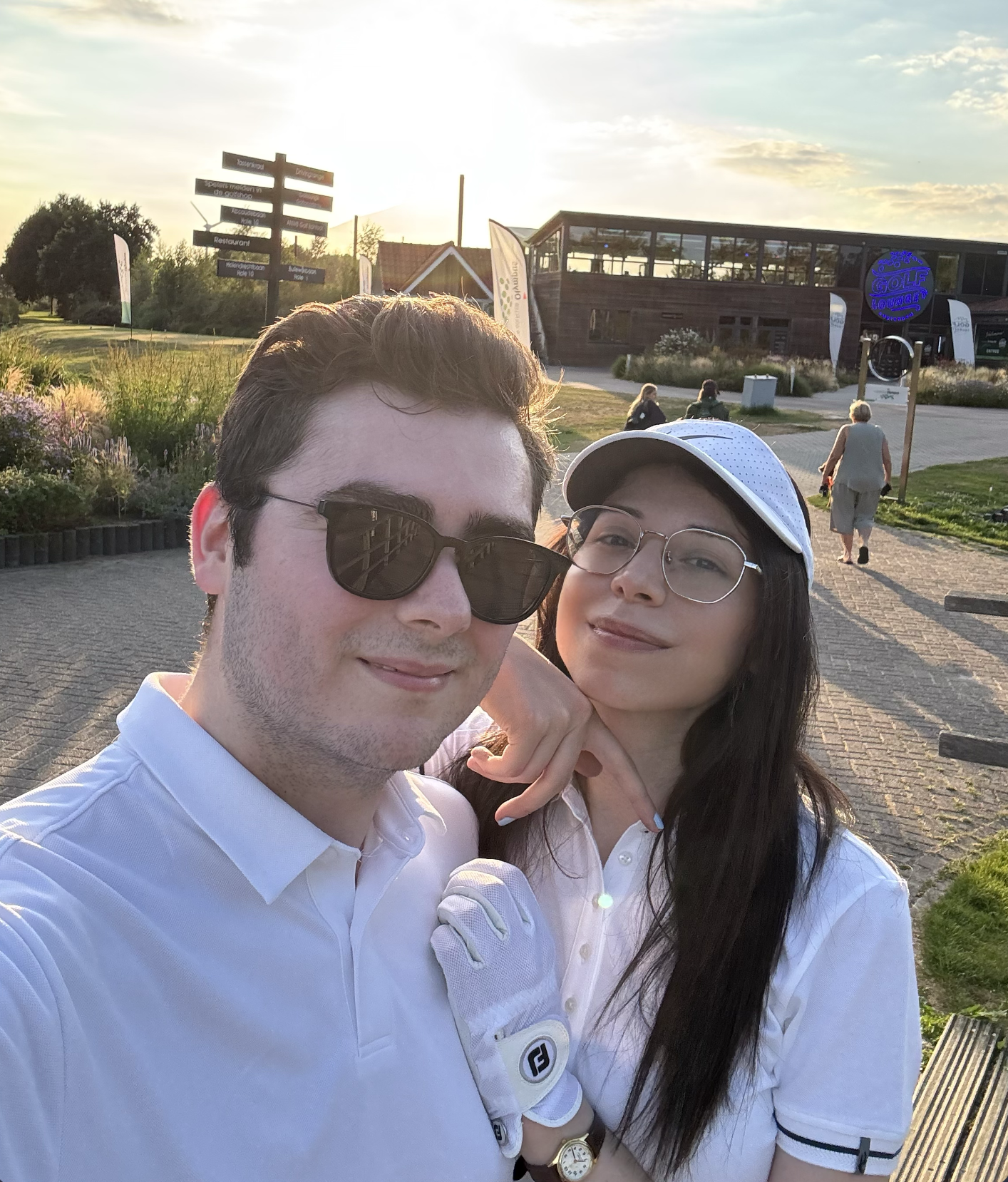
A first lesson, an unexpectedly addictive sport, and a few things worth knowing before picking up a club.
I used to think of golf as one of those sports that probably looked more interesting to the people playing it than to anyone watching.
Beautiful landscapes, carefully maintained grass, people dressed rather elegantly, and a tiny ball that apparently requires an extraordinary amount of concentration.
I understood the appeal of being outdoors. I was less convinced about the actual game.
Then I tried it.
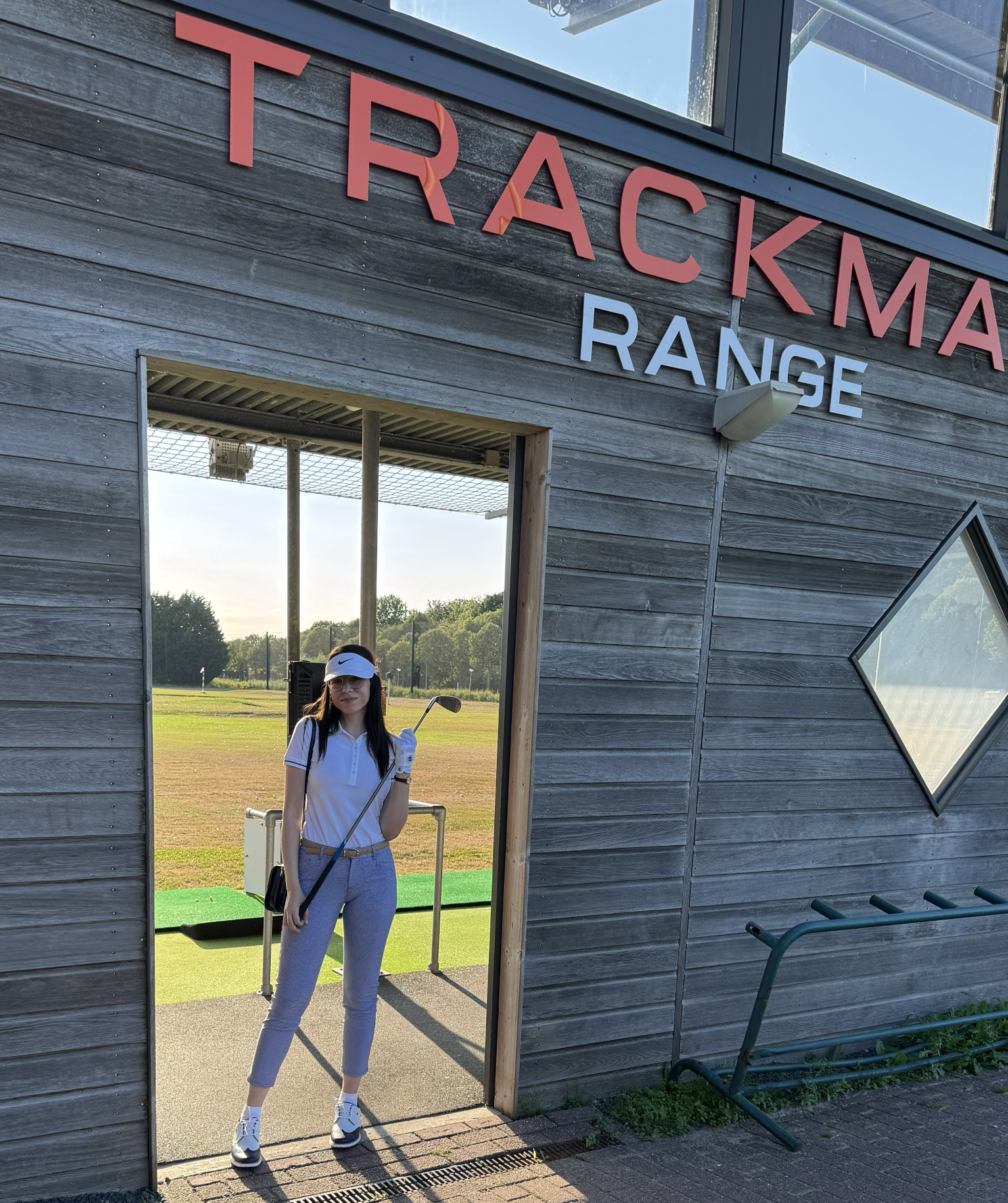
My first golf lesson was in Amsterdam, at a driving range where we were hitting balls from an elevated practice bay towards targets in the distance.
I discovered how much technique could possibly be involved in hitting a stationary ball.
As it turns out, quite a lot.
And I enjoyed it much more than I expected.
The Ball Isn't Even Moving. How Difficult Could It Be?
That was roughly my initial reasoning.
Unlike tennis, where you're constantly reacting to an incoming ball, golf gives you all the time in the world to prepare your shot.
Surely that should make things easier?
The challenge is that a golf swing is a carefully coordinated movement. The position of your hands, the rotation of your body, your balance, and the direction of the clubface all influence where the ball goes.
The basic sequence begins with your grip, or how you hold the club, and your stance, the position of your feet and body.
Then comes the backswing, bringing the club away from the ball, followed by the downswing towards it. The moment of contact is called impact, and the movement afterwards is the follow-through.
It sounds straightforward until you try to coordinate everything at once.
What I found particularly interesting is that hitting harder doesn't necessarily make a better shot. Timing, balance, and the position of the clubface matter enormously.
There is something almost engineering-like about it: a small change in angle produces a surprisingly large change in the result.
Which, naturally, makes me want to understand it even more.
The Golf Vocabulary Nobody Explains at First
One of the more confusing things about getting into golf is the sheer number of clubs and unfamiliar terms.
A driver is generally used for long tee shots. Irons cover a wide range of distances, while wedges are intended for shorter shots where height and control matter. A putter is what you use to roll the ball into the hole on the green.
Then there's the course itself.
You begin at the teeing area, aim towards the fairway, and eventually reach the green, where the hole is located.
The longer grass beside the fairway is called the rough. The sandy areas are bunkers, which are considerably prettier when your ball isn't in one.
Golf also has its own scoring language.
Every hole has a par, representing the score expected of a skilled golfer. Finishing one stroke under par is a birdie, while one stroke over is a bogey. Two strokes under is an eagle.
Unlike tennis, where winning more points is the objective, in golf you're generally trying to complete the course with fewer strokes.
And if you're wondering about the handicap everyone talks about, it's a numerical representation of playing ability, used to help golfers of different skill levels compete fairly.
Once you understand these terms, the entire sport becomes a little less mysterious.

Driving Ranges, Golf Courses, and Actually Getting Started
Something I hadn't appreciated before starting is that you don't need to play an entire golf course to try the sport.
A driving range is a practice area where you can repeatedly hit balls towards distance markers or targets. That's where we started.
A golf course is different: you play a sequence of holes, each with its own layout and challenges. Most full rounds consist of eighteen holes, but nine-hole and shorter par-3 courses are also popular.
Looking into golf courses made me realise how much variety there is.
There's also the Dutch system of baanpermissie, or permission to play on a particular course. Many courses require a recognised handicap, although beginners can practise at driving ranges and play certain shorter courses without one.
As for equipment, you don't need fourteen clubs and an expensive leather golf bag to take your first lesson.
Borrowed clubs are perfectly fine.
Comfortable clothing, shoes with good traction, and a glove for the lead hand are enough to begin. Golf clothing often includes polo shirts, tailored shorts, trousers, or golf skirts, although dress codes depend on the club.
And one etiquette rule is worth remembering immediately: if your ball is heading dangerously towards someone, shout "Fore!"
It's considerably more important than knowing whether your outfit matches.

An Unexpected New Favourite
What surprised me about golf wasn't simply that I enjoyed hitting the ball.
It was how absorbed I became in the process of improving a movement that initially seemed so simple.
Golf has a wonderful way of making you concentrate on one small thing at a time. You prepare, make your swing, watch the result, and immediately begin thinking about what you could change.
There's patience involved, but also a rather addictive feeling of progress.
And although golf and tennis became part of the same summer for us, they offer very different experiences.
Tennis is reactive, energetic, and quick. Golf gives you more time to think, which turns out to be both a blessing and a complication.
I like that contrast.
We started exploring these sports because they seemed like enjoyable things to do together. I didn't particularly expect golf to become such an interesting little obsession.
But it did.
And now I understand why people willingly spend hours trying to persuade a small white ball to travel in a very particular direction.
Until next time,
Suhe